


Awakening – Fun Math Games
Legends of Learning
I approached Awakening – Fun Math Games as a parent or learner might: looking for a gentle way to make math practice feel less like another worksheet. It is an educational game from Legends of Learning, aimed at children and rated Everyone. The basic download is free, although optional in-app purchases range from $4.99 to $59.99 per item, so I would treat the free experience as the starting point before deciding whether anything extra is worthwhile.
The central idea is straightforward. Instead of presenting math as a sequence of static exercises, Awakening places practice inside a game-like setting. That change matters for children who understand a skill but lose interest quickly when the work looks repetitive. I found the strongest appeal in the short, focused nature of the activity: it gives a child a reason to attempt another problem rather than simply asking for more discipline.
Getting started without making math feel intimidating
The game was released on January 21, 2021, and its current version is 1.6.0. It supports devices running at least Android 7.1, which makes it accessible on many older Android phones and tablets. That is useful for families who do not keep the newest device in the house for children. The store places it in the educational game category, and that description fits better than calling it a conventional arcade title or a full math course.
On first launch, I would recommend giving the child a quiet minute to look around before turning the session into a test. The most useful first goal is not completing a long sequence. It is simply understanding how an answer is entered, how a correct response is recognized, and what the game asks the player to do next. Children often become frustrated because adults explain the lesson before explaining the interaction. With this type of app, learning the rhythm of play is part of the setup.
A practical first-session routine is to sit beside the child for the opening attempts, then let them take over. I would avoid correcting every hesitation. Instead, I would ask the child to explain what the problem is asking and only step in when the interface or wording causes confusion. This keeps the game from becoming a disguised parent-led worksheet and lets you see whether the child can operate independently.
Related News






It is also worth checking the purchase flow before handing over the device. The game is free to start, but the presence of optional purchases means I would establish a simple household rule in advance: play the available content first, and discuss any paid option with an adult. That conversation is especially important on a shared tablet, where a child may not understand that a tap can have a financial consequence.
The first meaningful success
The first real win is not merely getting an answer right. It is when the child completes a problem, understands why the response worked, and chooses to continue without being pushed. I found that this is where the game’s format can help. A playful presentation gives immediate context to the task, while the math remains the thing the child must actually solve.
For a young learner, I would celebrate the process rather than speed. Asking, “How did you work that out?” is more useful than praising a fast tap. If the child uses fingers, draws an imaginary number line, or counts aloud, that is still productive thinking. The game can provide the prompt and motivation, but the adult conversation is what turns a correct guess into understanding.
Gallery
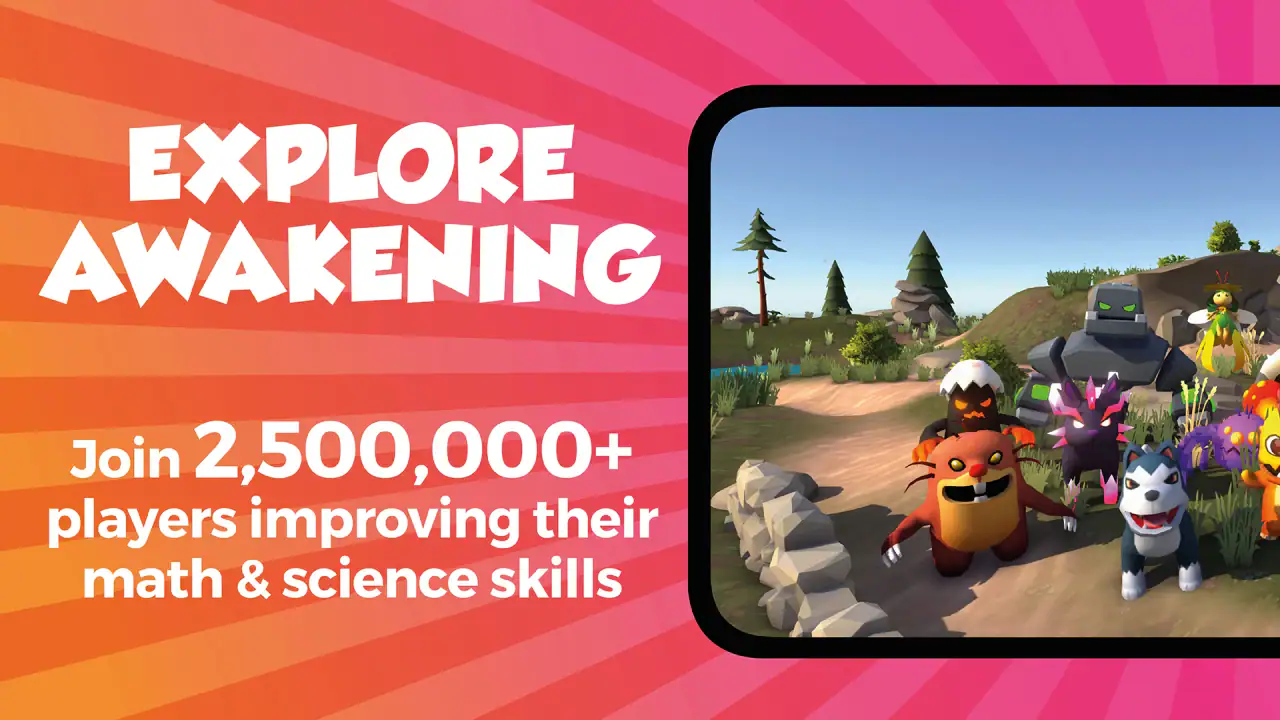
One useful approach is to stop after a small successful run instead of stretching the session until attention disappears. Ending on a solved challenge makes the next visit feel approachable. This is a better fit for children who associate educational apps with pressure. The goal is to build a repeatable habit: open the game, solve a few problems carefully, talk about one of them, and leave before frustration takes over.
Another practical tip is to use the game as a warm-up rather than the entire lesson. Before homework, a brief session can help a child switch into number-thinking mode. Afterward, you can connect one idea from the game to a real task, such as comparing quantities while cooking or working out change during a pretend shopping exercise. That makes the digital activity feel connected to daily life instead of isolated screen time.
Where the game fits better than ordinary alternatives
Compared with a paper worksheet, Awakening offers more immediate engagement and less preparation. A worksheet is easier to print, annotate, and keep as a record, but it can feel dull to a child who needs encouragement to begin. Compared with a general puzzle game, this title has a clearer educational purpose: the math is not decorative. The trade-off is that a game cannot replace a teacher’s explanation when a child has misunderstood a foundational idea.
It also occupies a different space from a full tutoring platform. A tutoring service can adapt conversation, diagnose misconceptions, and change its explanation in real time. Awakening is more convenient for independent practice, but I would not rely on it alone when a child repeatedly makes the same error. In that situation, a parent, teacher, or more guided learning resource is likely the better next step.
The game is most appealing for children who respond to playful repetition and need a low-pressure reason to practice. It may be less suitable for a learner who wants detailed written explanations, advanced problem-solving, or a structured curriculum that an adult can monitor closely. It is also not the right choice if the main goal is to replace direct instruction. Its strength is making practice easier to start, not covering every role in math education.
Common points of confusion for new players
The first confusion may be assuming that a correct answer automatically means the concept has been mastered. Children can sometimes recognize patterns or guess successfully without being able to explain their reasoning. I would occasionally pause and ask them to solve a similar example away from the screen. If they can transfer the idea, the game has supported learning; if not, the session has revealed where extra teaching is needed.
A second issue is treating every mistake as a failure. In an educational game, an incorrect response can be useful if the child has time to reconsider it. I would avoid immediately taking the device and solving the problem for them. Instead, ask what information is already visible and which part feels uncertain. That small change encourages the child to use the game as a thinking space rather than waiting for an adult rescue.
There is also a risk of focusing too much on the game layer. Rewards, movement, or the desire to continue can become more important than the calculation itself. I would set a clear purpose for each session, such as practicing careful addition or becoming more comfortable with a particular type of question. If the child is tapping quickly without reading, slow the pace and make explanation part of the activity.
Parents should also remember that comfort with the interface is not the same as comfort with math. A child may navigate confidently while still avoiding a difficult concept. Watching one short session gives you a better picture than assuming that enthusiastic play equals progress. This is one of the reasons I prefer using Awakening alongside conversation, physical examples, and ordinary schoolwork.
How to build a useful routine after the first session
Once the child understands the basic flow, I would give the game a specific place in the week. A short session before homework can work for one family, while another may prefer using it during a quiet afternoon. Consistency matters more than making each visit long. The game’s value comes from repeated, willing practice, not from turning it into a daily endurance challenge.
For a realistic household scenario, imagine a child returning from school tired and resisting a page of arithmetic. I would offer Awakening as a brief starting point, sit nearby for the first few problems, and ask the child to describe one solution. If the child becomes engaged, I would move to the paper assignment while the idea is fresh. If the game creates more distraction than focus, I would stop and use a physical explanation instead. That flexibility is important: the app should serve the learning moment, not control it.
Families should decide in advance how they will handle the free version and optional purchases. I would not buy anything simply because a child asks during an excited moment. First, observe whether the available experience is actually being used, whether the child is learning from it, and whether the added material would solve a real need. Since individual items can cost from $4.99 to $59.99, that decision deserves adult attention rather than an accidental tap.
The game has reached over 100 thousand installs and holds an average rating of 4.2 from around 388 ratings, with roughly 171 written reviews. Those figures suggest that it has found an audience, but they should not replace your own trial. Educational games depend heavily on a child’s age, confidence, patience, and preferred learning style. A positive response from one child does not guarantee that another will enjoy the same presentation.
Who should try it, and who should look elsewhere
I would recommend Awakening to a parent seeking a free first step into math practice for kids, especially when the child needs motivation to begin. It can also suit a learner who benefits from short sessions, immediate feedback, and a more inviting alternative to a worksheet. The Everyone rating makes it a reasonable family-oriented option, although adults should still guide screen use and purchases.
I would be more cautious if the child needs extensive explanations, formal progress reports, or one-to-one correction. In those cases, a teacher-led resource or a more structured tutoring tool may offer better support. I would also skip it as the only resource for a child preparing for a demanding exam or working far beyond basic game-based practice. The playful format is an advantage for engagement, but it can become a limitation when depth and documentation matter most.
Legends of Learning has made a sensible choice by presenting math through play, but the best results still come from an adult using the app deliberately. Start with observation, connect answers to reasoning, keep sessions manageable, and treat paid content as an optional decision rather than an automatic upgrade. Those habits reveal whether the game is genuinely helping your child or merely filling time.
My overall impression is positive, with a clear qualification: I see Awakening as a practice companion, not a complete math teacher. Its free entry point, child-friendly educational focus, and game-based approach make the first step less intimidating. If your child needs a nudge to engage with numbers, I think it is worth trying. Begin with one supervised session, look for a moment when the child can explain a successful answer, and then decide whether the experience deserves a regular place in your routine. The best sign of success is not longer screen time, but a child who feels more willing to try the next problem.
FAQs for Awakening – Fun Math Games
What is Awakening – Fun Math Games?
Awakening – Fun Math Games is an educational mobile game designed to make practicing mathematics more engaging. It presents players with interactive challenges and progressively structured exercises intended to improve calculation speed, logical thinking, and confidence with numbers. The game is suitable for learners who prefer short, game-like practice sessions rather than traditional worksheets, although the exact difficulty and available topics may vary by version and device.
Who can benefit from Awakening – Fun Math Games?
The app can be useful for children, students, and anyone who wants to practice basic mathematical skills in a more entertaining format. It may help with addition, subtraction, multiplication, division, mental arithmetic, and number-based problem solving, depending on the content included in the installed version. Parents should review the difficulty level first, since younger learners may need guidance while older students may find the early challenges too simple.
Does Awakening – Fun Math Games work without an internet connection?
Many math practice games allow users to complete their main exercises offline after installation, which is convenient for travel, school commutes, or areas with unreliable service. However, features such as advertisements, progress synchronization, updates, online rankings, or in-app purchases may require an internet connection. Before relying on offline access, open the game once while connected and check whether all intended activities are available without Wi-Fi or mobile data.
Is Awakening – Fun Math Games free to download?
The game may be available as a free download, but users should carefully check the store listing for advertisements, optional purchases, premium levels, or subscription-related features. Free access does not always mean that every activity is unlocked. Parents are advised to review purchase settings and enable device-level restrictions if children will use the app. Pricing, included content, and monetization can differ between Android and iOS versions.
Is Awakening – Fun Math Games safe and suitable for children?
As an educational math title, the app is generally intended to provide a focused learning experience rather than social networking or open communication. Nevertheless, parents should examine the age rating, advertising behavior, permissions, and any external links shown in the current store version. It is also worth checking whether progress is stored locally or connected to an account. Supervision is recommended for younger users, especially when purchases or third-party advertisements are present.
Pros
- Short sessions make it easy to practice math anywhere.
- Covers several core skills
- from arithmetic to problem solving.
- Immediate feedback helps children learn from mistakes.
- Bright visuals and game elements make practice less intimidating.
- Useful for building speed and confidence with regular play.
Cons
- Some activities may feel repetitive after extended use.
- Difficulty progression may not suit every learner equally.
- Younger children may need help understanding certain instructions.
- Progress can depend on consistent daily practice to feel rewarding.
- Limited appeal for advanced students seeking challenging math topics.


